Alexandria
What became the town of Alexandria began as a crossing, a shop and a few houses close to the west bank of the upper River Leven on the road to Loch Lomond and the north. The largest settlement at that time was Bonhill, on the opposite bank but the introduction from 1790 of cotton dying, following the development of bleaching from 1715 was to change all that. By 1841 over 6,000 lived in the Bonhill parish, but of them 2,100 were now in the original village and just over 3000 in what might by then be called a town, founded only in the 1780s and named for Alexander Smollett.
And by 1871 Alexandria's population alone had risen to between 4500 and 5000, with a considerable influxes from the Perthshire and West Highalnds, the former bringing "fitba'" and the latter shinty. And it was the Highland game that, with cricket played in summer, was the one of choice with annual games played between the works, in Alexandria of John Ewing and of Archibald Ewing across the river, both of whom were later Orr Ewings and then Orr-Ewings. 2000 on-lookers were at the 1870 encounter.
So the sporting interest was already there when in 1872 the Vale of Leven Football Club was founded. The difficult ies with the foundation are why, when and what. It is said to have been on 20th August at the earliest, which makes it after the football game Queen's Park had played in March that year against The Wanderers in the semi-final of the first FA Cup, but also after the first two rugby internationals, the first played eighteen months earlier in March 1871, the second in February 1872 yet before the following November's official, first Association football international. That sequence makes it possible that, as per one theory, "The Vale", as the club would be known, had begun favouring the oval- game but switched to the round ball following, as also suggested, a visit from South Glasgow to Alexandria to the then Park Neuk sports ground by Queen's Park. The problem is that the initial meeting of the two clubs on 21st December 1872 is recorded as taking place in Glasgow and the first encounter in Alexandria seems to have been recorded only on 11th January, 1973.
However, whatever the reality, by the next, the third meeting of the two clubs on 15th February 1873 The Vale had, first, accepted the Association rules and, second, was playing and sticking in it and at least three more games that season with the 2-2-6 formation Scotland had surprisingly used in the international the previous November 30th, whilst Queen's Park curiously but revealingly had reverted to the English 2-1- or 1-2-7.
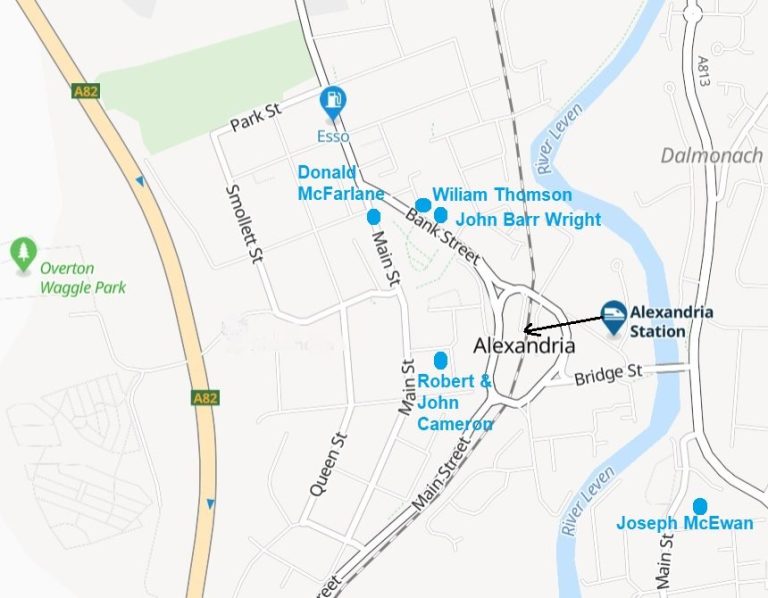
The Founders and John Cameron
When Vale of Leven Football Club, aka The Vale, was formed in August of 1872, whether initially to play the oval- or round-ball game, the officers were as follows. President was Donald McFarlane, Vice-President W. B. Thomson, the Secretary John Barr Wright, the Treasurer Joseph McEwan and the Custodier, the groundsman, R. Cameron.
In reverse order R. Cameron was probably Robert, aged eighteen, a Printfield Worker, a member of the first season's playing pool and the son of John, the owner of a diary in the town, the cows to provide the milk and the fields they grazed. And it was one of those that Robert's father made available as the first pitch for the first season. Then Joseph McEwan was at twenty-three a little older and a Calico Printer. But by 1881 he had moved to Glasgow, working as a Clerk in a Bolt Manufacturer , eventually becoming a Manufacturer himself. He would die in 1917, aged sixty-nine and is yet another of the important, early footballing figures to be buried in the city's Cathcart cemetery.
John Barr Wright had been born in Balloch, so a mile and half to the north, was again just eighteen, stayed on Bank St. and was working, as he would until retirement, as a Clerk. Moreover he would die in 1932, living on Main St., to be buried again locally across the river in Bonhill village.
And finally there were the Presidents, full and vice. Donald McFarlane was a twenty-year-old Mercantile Clerk, living at "Myrtle Bank" on Main Street. He had been born in 1851 nearby on Bank St., the son of a local father, a Druggist (Pharmacist) and a mother from Forres. But during the next decade he was to move away. As a Cotton and Yarn salesman he would in 1880 marry in Birmingham, the couple returning to Dunbartonshire but the village of Cardross. And W.B. Thomson, William Thomson, had been born in Alexandria, trained as a tailor in Glasgow, married there but at twenty returned to Bank St. and seems to have remained there for much of the rest of his life.
Amble One
The Pioneers
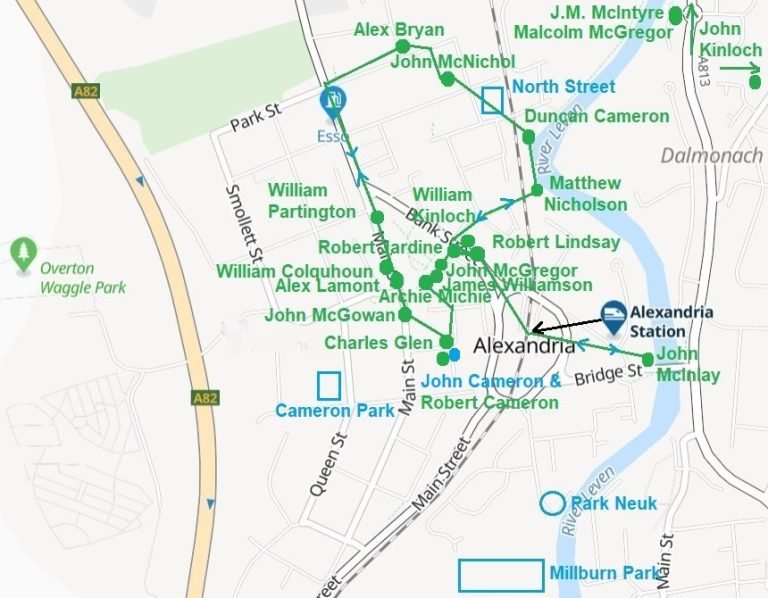
And from the Press of the era we have a good idea of a number The Vale's founding members and from further research where they lived in the town, with a concentration in the centre with the Park Neuk to the south-east and Cameron Park, the club's first, official ground to the south-west.
So, from Alexandria station, if you head north we know the Roberts, Lindsay and Jardine, plus William Kinloch were living on Bank St, before then turning left into the now car-park cut-through that was Mitchell Way and St. There were homes of John McGregor, James Williamson and Archie Michie. John Glen, stayed south on Church St., as did player and early ground custodian Robert Cameron and his father, John (See above), the providor of the land for The Vale's first ground, Cameron Park. That is before you you turn west to join Main St., where, heading now north, John McGowan stayed, as did at 169, Alex, Lamont, William Colquhoun and William Partington.
Then continuing on onto North Main St. on the right is Wilson St.. Alex Bryan stayed there with the first John McNichol on Gas St. and, passing what would soon become until 1888 The Vale's second ground, North St. Park you reach Linnbane. Named in Gaelic for the "white pool" there in the River Leven it was the home Duncan Cameron, whilst a little further on Matthew Nicholson would live on Waterside Rd.
And with that it is a short walk to Bank St. and back to the station, taking the time before departing to walk east along Bridge St. to John McInlay residence at West Bridge End and either to glance across the river and return or cross to Bonhill for a stroll through what was then the home-village of several of The Vale's Golden Era players and more still, who would make their marks, at Renton, from there at Celtic, in England and Ireland.
Golden Teams
Vale of Leven would have a good decade of real success, a pioneer club that eventually would not in essence be able to keep pace with what would be the professionalisation of the game. And that period might even have been a dozen years had the club not been embroiled in the Ferguson Affair. John Ferguson, speedy winger, would be the first blue-collar star of the game, but one who because previously he had accepted, as was the norm in Scotland's working-class, prize-money for his athletic ability was almost excluded from participation in the new game. It was an impasse that took the best part of two seasons fully to resolve but meant Ferguson himself became the bridge between two great teams. He would be there in the initial one as it was the first in Scotland to defeat the country's still doyen club, Queen's Park and there again in 1877 in the first working-class club in all Britain to win a major trophy, the first of three successive Scottish Cups. And still he would be there in 1885 with otherwise a rebuilt team, locally-sourced once more, in the third of three more, again consecutive but this time losing Scottish Cup Final appearances.
Amble Two
Team I
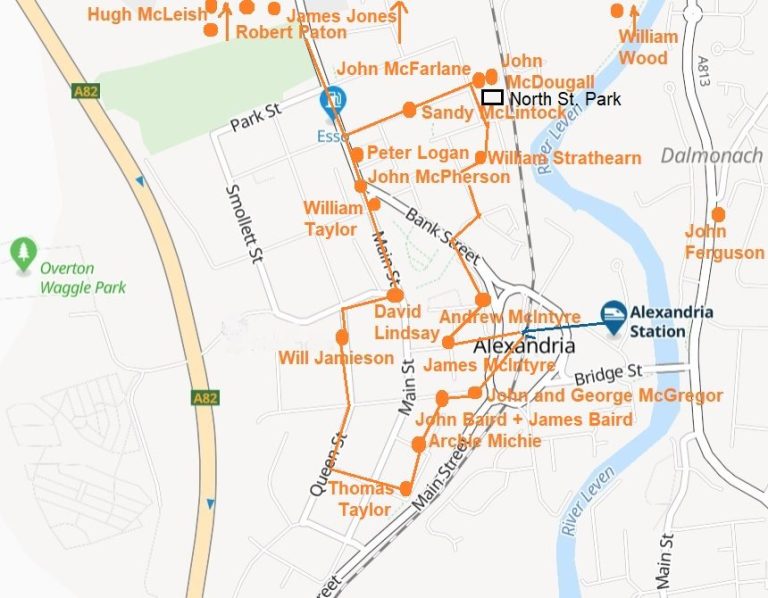
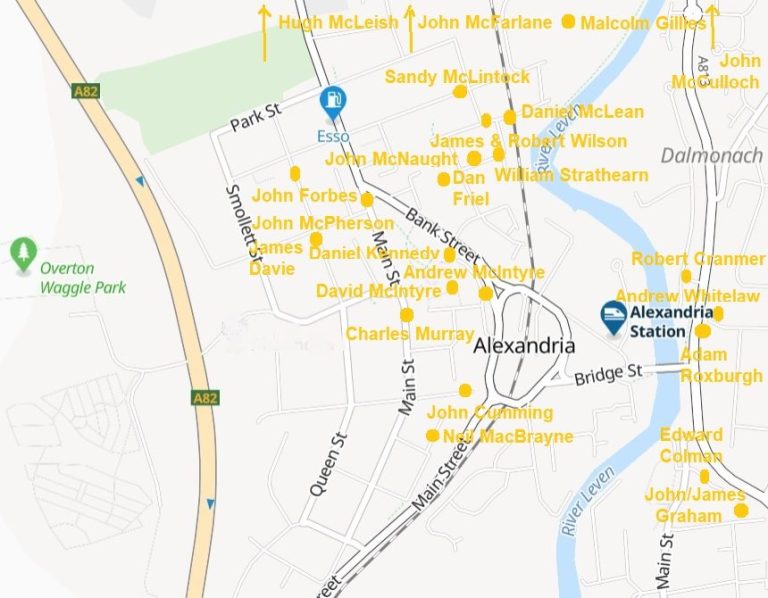
When in 1877 The Vale won its first Scottish Cup, defeating Rangers over three encounters and only by one goal in nine, its team was William Wood in goal, the backs Michie and Andrew McIntyre, the half-backs, Will Jamieson and Alex McLintock, and the forwards, John Ferguson, the captain, John McGregor, David Lindsay, Robert Paton, John McDougall and John Baird with at least another half-a-dozen in the squad. Two seasons later the core was still there but now with Robert Parlane in goal plus James McIntyre, John's brother, John McFarlane and Peter McGregor with a full second team there also to be called upon. And the sources, the homes of many of these players can be seen by simply strolling around the town-centre, north towards Balloch with thoughout Johnny Ferguson a son of across the river in Jamestown.
William Wood, the local Analytical Chemist stayed to north of the Milton dye-works, as did Robert Paton. Then grouped around The Vale's North St. ground were John McFarlane and Alex McLintock, whilst in the town centre on and between Main and Bank Streets were Andrew McIntyre, Will Jamieson, David Lindsay and John and James McGregor. And just south of the railway station lived Archie Mitchie and John Baird with several others, second- and occasionals first-teamers dotted throughout the town.
Amble Three
Team II
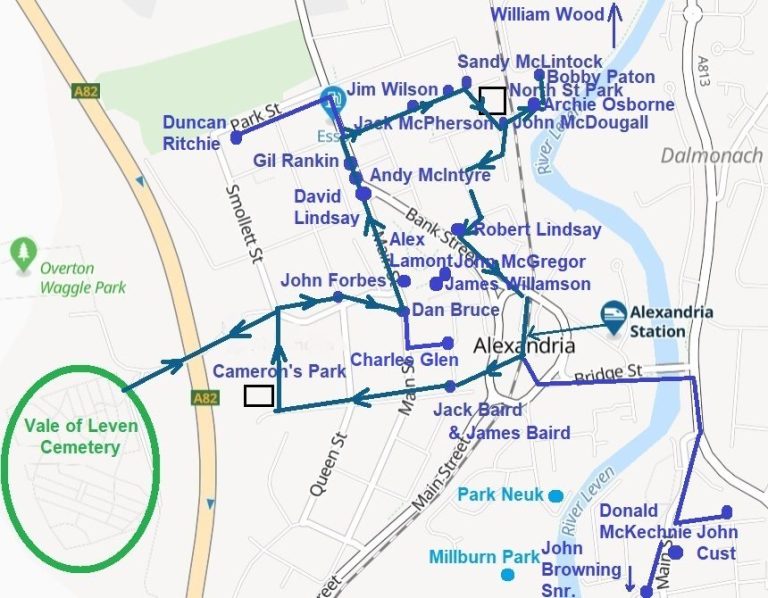
With the ageing of The Vale's original team and after its third consecutive winning of the Scottish Cup there was a process of rebuild. It lead by 1883 with three more appearances, one after another, in this case all Cup Final defeats, although one was a walk-over for other reasons. In 1883 itself the team was Alex McLintock, Andrew McIntyre, John Forbes, John McPherson, H. McLeish, J. McFarlane, D. Kennedy, M. Gillies, Robert McCrae, W. H. Johnstone and Dan Friel. It meant that three of the first Golden team remained - Alex McLintock, Andrew McIntyre and Johnny McFarlane. As to the newcomers Hugh Mcleish stayed on Charleston Row, which we are not sure whether it lay just north of the town or in its centre, Daniel Kennedy was another on Mitchell St., Malcolm Gillies lived at Ewing's Land, exact location again unknown, Robert MacRae was from Renton and W.H. Johnston(e) perhaps from Dunbarton, even Glasgow.
And in 1885 it was James Wilson, Andrew McIntyre, six years on, and John Forbes once more, J. Abraham, R. Wilson, J. Galloway, David McIntyre, Johnny Ferguson, back in the team, with from 1883 again W. H. Johnston(e), M. D. Gillies and Daniel Kennedy. Three of the changes are explained by in the interim Alex McLintock, Dan Friel and Robert MacRae having gone south, the first and last directly to Burnley, the middle one initially to Accrington but then to the Turf Moor club also. It meant Alexandria-born James Wilson came in as goalkeeper. He stayed at 55, Alexander St. as did his elder brother, one of the half-backs. In addition David McIntyre was at 22, Random St., whilst John Abraham seems to have been a Renton-boy, a Hammersmith, and James Galloway from Dumbarton and a Hammerman.
Amble Four
Vale of Leven Cemetery
Many of The Vale's players, particularly the earlier ones, even if they were born elsewhere, would live all their adult lives in Alexandria, across the river in Bonhill and, like Archie McCall, even in Renton but be buried in the calm Vale of Leven Cemetery.
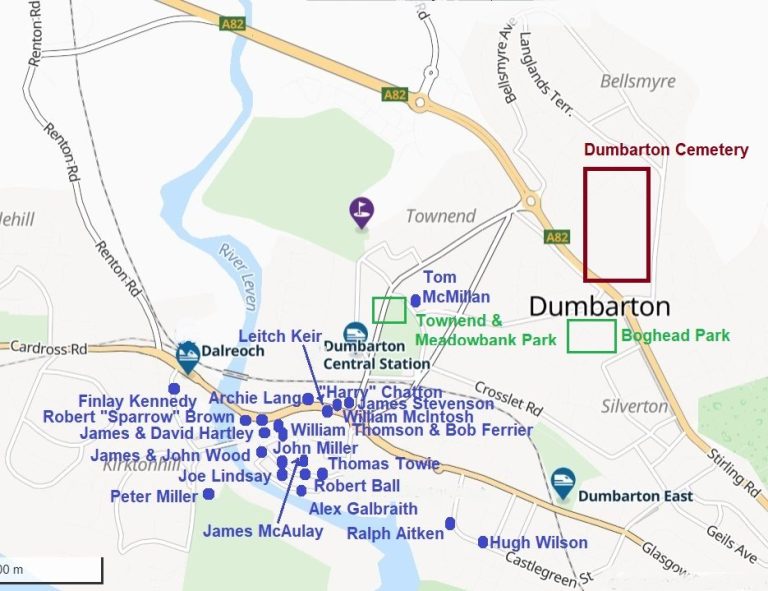
So far thirteen graves have been identified but at least another fourteen are also there, their lairs known but not yet exactly identified and photographed. The map, left, plots where all of them stayed at the time of or just before, learning the game, their footballing careers. They are, apart from those from Bonhill and Renton, mainly in two tight clusters, one in the town-centre and the other around the club's second ground, from before 1876 until 1888 and about which little is known. It lay on North St. in the part of the town towards Balloch and between the gas-works, the railway-line and a foundry.
The graves so far known are to be seen in our Resting Places section but we are working on precisely identifying more and they will be posted as soon as available. As to many of the players themselves details of their homes are already included in the Alexander Ambles 1 and 2, the Bonhill Stroll and the Renton Rambles.
_________________________________________________________________________________________________________
Bonhill
Bonhill was a hard-working village cum small town, working class to the core. Football had with Alexandria come to it in 1872 and from it and Alexandria, the town on the opposite bank of the River Leven came Scotland's, indeed Britain's and therefore the World's first trophy-winning team that was not middle- or upper-class. Within five years Vale of Leven FC, "The Vale" based in Alexandria, would take the Scottish Cup, not once but three times in a row. Its star-player was print-field worker, Johnny Ferguson. He had been born up the river in Jamestown but later settled in Bonhill, eventually able to leave labouring for a living to become for period a "Licenced Grocer" in the village.
By then he had hung up his playing-boots but, whilst he was still kicking the leather in the top flight, a remarkable group of boys with footballing talent that was to be proven on the fields at home and in England began to emerge in the houses and streets around him. In 1881 James Cowan and Neilly McCallum were twelve, James McMillan eleven and John Cowan, James' younger brother and Malcolm McVean ten. And to them were added three siblings, the Paton brothers, who would come a little later to the group, the eldest James, fourteen in 1881, Alex, ten and Dan Paton, eight.
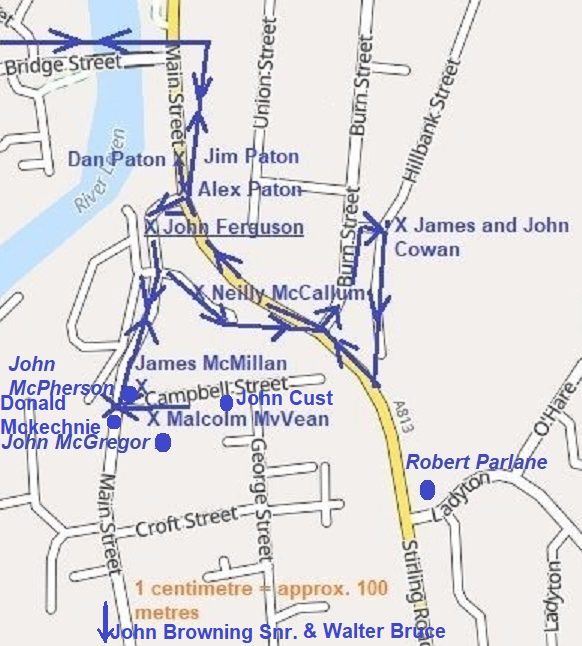
The Patons, like, Ferguson, would live on Main St., McVean and McMillan just off it on Campbell, as would John Cust, whilst McCallum stayed one up on Burn and the Cowans' grandad one up still on Hillbank. In essence they all were much the same age, grew up within yards of each other and must have kicked a ball on the streets together, learning their trade.
And trade it would be. From local teams and then The Vale and/or Renton each would head South. For three, the Cowans and Dan Paton, it would be eventually to Birmingham and Villa. Paton, a forward, would not stay long but return to Scotland and with St. Bernard's take the Scottish Cup. John Cowan, also a forward would be an FA Cup- and Championship-winner, and Jimmy perhaps the greatest centre-half of his time, become a multiple trophy-winner and captain of both club and country. Then for John Cust, a winger, it would be Bury, for Johnny Browning Snr. Celtic and Walter Bruce St. Mirren.
McVean and McMillan, both inside-forwards, on the other hand, would head to Merseyside, the latter to Everton and the former to be part of Liverpool's Team of the Macs. Indeed it would be McVean, who would score the Anfield, in fact new Anfield club's first goal ever, then also score the first in the League and be club-captain.
This was whilst McCallum, a winger, went to Nottingham via the scoring of Celtic's first ever goal and, after a first with Renton, a second Scottish Cup success with the Parkhead club. And finally Alex Paton's road would take him as a half-back to an FA Cup victory with Bolton Wanderers, whilst brother James would stay local apart from one appearance for Villa and be the centre-forward in the Vale of Leven team that alongside McMillan, before the latter headed South, would lose the 1890 Scottish Cup Final.
And as to John Ferguson's role in all this. In the vital years for a young player, never mind eight, he was there, still taking to the field himself and therefore presumably still interested. With the boys in their mid- teens he even , at the age of almost thirty-six, appeared in a fourth Scottish Cup Final, lost to neighbours, Renton, but only after a replay. He is known to have coached and perhaps most damning of all, when he move to Kilmarnock, still in the Drinks Trade but it is said partly to coach, the Bonhill well would rapidly dry.
And so to the "Stroll", from the exit to Alexandria station take the path to the right down and to the station ring-road. Cross it into Bridge St. and continue down to the river and cross the bridge itself. On your way you will pass the places where several of the original Vale of Leven players were brought up. On the other side of the bridge turn right in to Bonhill Main St., where the Patons and Johnny Ferguson lived, taking the kink right after about two hundred yards and continuing on to the kirk on the right and later Johnny Browning at No. 460.. Look left and there is Campbell St.. James McMillan stayed at No. 8, Malcolm McVean at Nos. 29 and 39, John Cust at No. 67.
Then retrace your steps to the next on the right. That is Burn St., No. 17 being the one time home of Neilly McCallum, who incidentally is buried in the village churchyard, the only one to be so. At the top end of Burn you will see steps. Climb them to Stirling St. and cross. That will take you into an extension of Burn, from which you take the first right. It leads into Hillbank, where the Cowans would be found at Grandad McAulay's at no.39.
And that it the end of tour. Turn right on Hillbank taking the path at the end to Stirling once more, where turning right will take you back to Main, the bridge and into Alexandria once more. In all it is about a mile but a packed one if you are a true Scottish football fan and buff. Moreover, there is more. Less than a decade later Tommy Galbraith would head South to Leicester from again Hillbank St. and John Docherty from Burn to Dumbarton, Celtic and back.
_________________________________________________________________________________________________________
Renton
and Millburn
There can be few if any places in the World, never mind Scotland, than Dunbartonshire's Renton, where literally pivotal footballing history can be so concentrated. It was the village team, which, in 1875 by reaching the second ever Scottish Cup Final provided the first provincial challenge to Glasgow's place in the Scottish game. Admittedly that final was lost but it would only be two season's later that Vale of Leven, the club from neighbouring Alexandria, would complete the task and for a while itself be dominant. However, Renton would regroup and after a few fallow years from 1883 a new group of players would emerge from its working-class streets and change football forever. If Vale of Leven, The Vale, can be said to have been the first, successful working-man's team then Renton, astoundingly already one hundred and thirty-five years ago and then after a five year incubation, was the source of the modern game. Football might have been invented England but in and from 1888 both north and south of the border it would be changed irrevocably by a club that no longer exists and men and boys, who grew in terms of both life and football cheek by jowl.
So what was so special about 1888. Quite simply It was the year Renton, two years after it first success, won the Scottish Cup for the second time and then beat England's West Bromwich Albion and Preston North End, that and the next season's winners of the English FA Cup with Preston also in 1889 first English League Champions. And they it did first of all by employing a new style of football developed, then refined and finally coached specifically at and by the club, and secondly with an initial group of fifteen or so young men, who had emerged from a collection of then teeming streets, which, with never a suspicion of what has gone before, may even today be walked down and through in a matter of minutes; total distance perhaps a mile. Moreover, many of those same young men would go South, the first of what would be not one by three Renton waves, over the next seven or so years, persuaded by those same two English clubs and others to earn a living from football that was officially denied them in their own land. And in doing so they took the new style, their collective style, on the first stage of its journey into an entire, wider World.
So now, if your curiosity is pricked, then here is the history to bring it all to life. In many, indeed in most places, with Renton no exception, the railway was the key to the implantation of football in communities and its growth. It allowed home teams to travel away easily and away teams to arrive with equal facility. It enabled competition and rivalry produced crowds and revenue. So the village station seems an appropriate place to start all three of the rambles.
Ramble One
The First Wave 1873
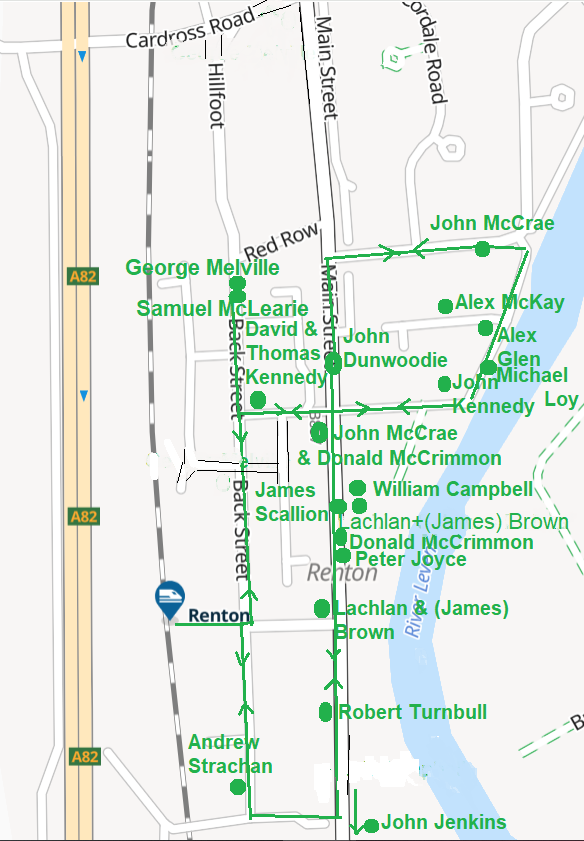
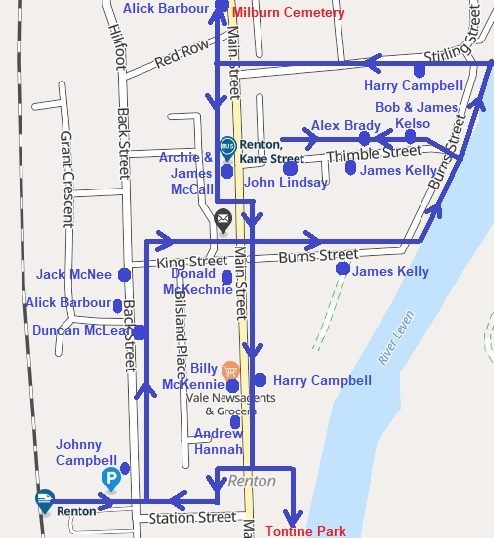
Renton F.C. was founded perhaps late in 1872 but certainly in the first half of 1873 and a good number of its early players can be traced. Out of Renton railway station into Back St. Andrew Strachan lived at one end to the right and George Melville and Samuel McLearie to the left in Church Place then right at the other end. Then there were the Kennedy brothers, Thomas and David on King St., that is before crossing Main St. left to Stirling St. and John McCrae, with in parallel Thimble St. at No. 31 and 16 the two Alexes, Glen and McKay.
And at the bottom of Thimble and right was another Kennedy, John, before it is back to Main St. itself and, north to south, John Dunwoodie stayed at 71, James Scallion at 116, William Campbell at 139, again John Mcrae at 155 and Peter Joyce at 122. Then there was a small cluster with the Brown brothers, Lachlan and James, with two addressed but mainly at No. 62, Robert Turnbull the same but largely at 57 and, again with two residences, Donald McCrimmon(d), who stayed mostly at 54.
Ramble Two
Second Wave 1888
Out of the station and to the T-junction is Back St., where Johnny Campbell and Jack McNee, both forwards in 1888, grew up, as did Duncan McLean, reserve full-back but soon to be a star in his own right. Campbell would later find his way to Sunderland and Newcastle, McNee to Bolton, McLean to Everton and Liverpool. Up Back St. and first on the right is King St. Take it down to Main St., cross into Burns St., following it to the river and to the left once more. James Kelly, the future pivot of the 1888 team at attacking centre-half, founder player at Celtic and Scottish international would live there at No. 14 as a small child. That was before his family moved into the next turning on the left, the remarkable Thimble St., perhaps the most capped hundred yards in the World.
There three of the 1888 eleven would be teenagers, Kelly himself at No. 15, goalkeeper, John Lindsay, later signed by Accrington and also an international three times over at No. 1 and one of Kelly's half-back partners, Bob Kelso, at No. 37, with his younger brother, James. Whilst the latter, also a half-back, would briefly join Liverpool, the former would, amongst other clubs, play for Preston, Everton and Dundee, winning seven caps to Kelly's nine. Moreover, Alex Brady would later stay at No. 11 and he too would play for Celtic before seven seasons at Sheffield Wednesday rendered him ineligible for caps.
Then turn back on yourselves and return to Burn's St. once more turning left to the next left, Stirling St, walking its length. Harry Campbell, another of the forwards and again a Scotland player, stayed at No. 14 as as a wean.
At the top of Stirling again go to your left. Now you are back on Main St., where south to north left full-back, Andrew Hannah, spent his entire childhood at No. 72 and at No. 70, so presumably next door. He too would head to Merseyside, to Everton first and then, on its formation, Liverpool. He would also win a cap. Then the same Harry Campbell was a teenager at No. 114 before Blackburn came calling, whilst Donald McKechnie, the team's third half-back, would live at No. 145 and also go to Sunderland, with between them at No. 129 Billy McKennie who went, seemingly from the reserves, first to Preston and then Darwen. And at No. 177, it seems somewhere near the top of Thimble St., there would be the McCall brothers, actually half-brothers, the exceptions. Archie from left back would be captain in 1888. James was the fourth of the five forwards. Both would win Scotland caps but neither leave the Vale. James is even buried in Renton's Milburn churchyard a few hundred yards north of where they had lived, as indeed is Duncan McLean, Alex Brady and others.
And finally from the team was the one import, Neilly McCallum, and still on Main St. the man, whose place from 1885 he would take, Alick Barbour. Neilly would grow up in Bonhill across the river, Barbour lived as a child at 33, Back St. and as a teenager at 263, Main. And both would eventually find their ways to Nottingham. McCallum would first play for Forest and then Notts County, via Celtic with Kelly, and for Scotland once more. Alick would follow him at Forest having been first at Bolton alongside McNee for two seasons.
And then and there it is maybe time for a coffee, a piece and a quick walk a quarter of a mile southward to Tontine Park, perhaps the centre of it all. The name survives as a street at the centre of a housing-estate, built in part by Archie McCall, a brickie to trade, on the very ground he and the others had once graced. That is before it is back for walkers at least to the starting point at Station St., the present and onward.
But the flow of schooled Renton talent did not stop there. Two more waves of young men would emerge each approximately four years apart over the next eight. Most were persuaded by English clubs to earn a living from football that was initially officially denied them in their own land but, as professionalism came to Scotland, other teams in our own game beyond Celtic came in to draw from the pool. And in doing so these younger products of Renton youth took the same new style now not only South but across our own land.
Ramble Three
Third Wave 1891
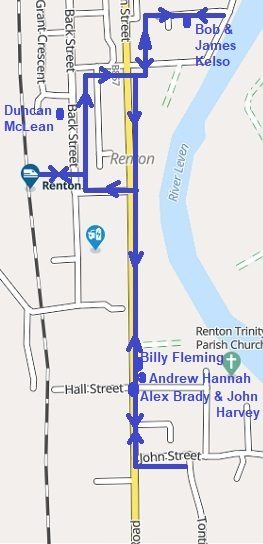
Out of the station to the T-junction you turn left into the upper part of Back St. Again Duncan McLean is noted as growing up there before now a season at full-back in Renton's first team and five more on Merseyside. He started at Everton but on the split remained at Anfield and newly-formed Liverpool. In fact he was a founder-member of the The Team of the Macs.
Up Back St. and first on the right is King St. Take it down to Main St., turn left once more, cross and cut through the alley into Thimble St.. There at No. 37 lived the Kelsos. Bob would be a member of Renton's greatest team but there was also James, his younger brother. Again a half-back he would also briefly join Liverpool, not be successful and return home. In fact his life would be tragically short. He would commit suicide. But there is some joy in the sadness. A decade later his widow would marry the by then also widowed Duncan Mclean and their families would combine, supplemented by a further son.
Now retraced your steps back onto Main St., turn right and follow it through the centre of the village to its junction with Hall St. to right and Leven St. to the left.
Here there was once the village's public park, before the creation of Tontine Park, from 1878 Renton F.C.'s ground, and the present day one across the road. Here is Trinity Place, once Church Place and, it is thought, Park Buildings and Park Terrace. The first was the home of Billy Fleming, who would go on to Partick Thistle, Sheffield United and Dundee amongst other. Park Buildings was where David Hannah was a teenager. He would be another to join Sunderland and Liverpool but also Arsenal. And Park Terrace was where Alex Brady stayed at aged ten, as did John Harvey, newly arrived from Glasgow and going on to ply his trade again at Sunderland plus Clyde and Newcastle, where he became a trainer of its great team of the 1910s.
And then there it perhaps again time for a quick walk a quarter of a mile southward to Tontine Park. The name survives as a street at the centre of a housing-estate. That is before it is back for walkers at least to the starting point at the station and again the present and onward.
Yet, despite being twice stripped of first- and reserve-team players alike, being expelled in 1891 from the Scottish Football League for "professionalism" only to be reinstated and relegation in 1894, Renton was still able to regroup. It reached the Cup Final in 1895, only to lose once more, players again moving on before what was effectively to prove to be final decline.
Thimble Street
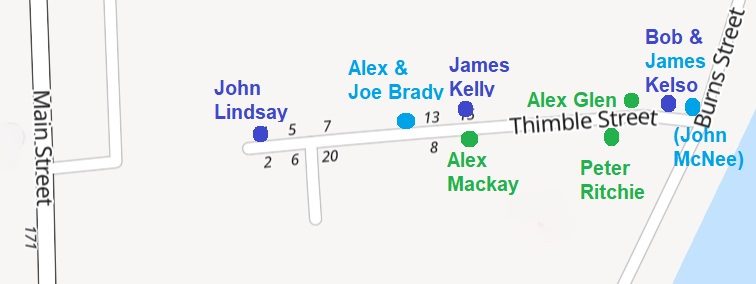
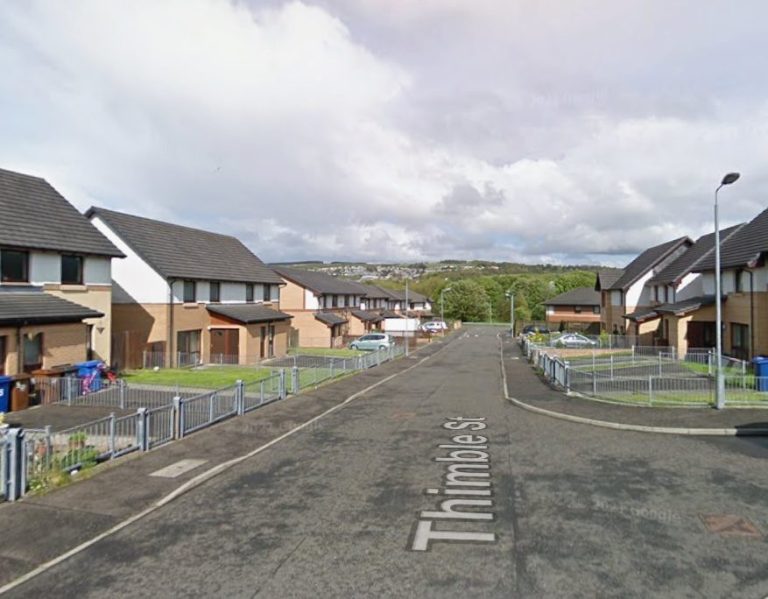
Thimble St., now completely redeveloped, is little more than a hundred years long, stretching between Main St. and the River Leven. Yet there cannot be a road that is more important to, more pivotal in the development of modern World football. At the beginning of the town's club, the first iteration of Renton F.C., Alex McKay lived at 16, Peter Ritchie of Renton Thistle at 28 and Alex Glen at 31.
Then in the great Renton team of 1888 were three players, three internationalists, John Lindsay at no.1, James Kelly, later the first captain of Celtic at 15 and at 37 Bob Kelso, another internationalist, and his brother James, who went to Liverpool. And in addition were the Bradys, four footballing brothers, of whom Joe would go on to feature for Sheffield Utd. and Alex, who was perhaps the best player never to play for Scotland. At sixteen he was already a professional in England with Newcastle West End and would over the next sixteen season appear for seven more English clubs, have 1891-2 with Celtic and finally two campaigns with Clydebank with a last one back in with his home-village club.
And finally there is Jack McNee, born at Succoth Farm south of the village, who also went South but not before he had married Nellie Birkmyre from No. 39.
Ramble Four
The Fourth Wave 1895
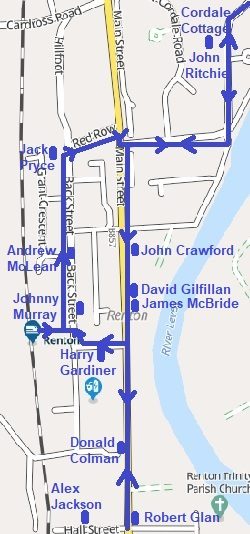
Out of the station, to the T-junction you turn left into the upper part of Back St. There Andrew Mclean, brother of Duncan McLean, grew up, as did Johnny Murray and Jack Pryce. Andrew Mclean and Murray would stay with their village club. Murray and Pryce would be in the Renton team that lost the 1895 Scottish Cup Final along with a John, quite possibly the middle McLean brother. Pryce would go on to Hibernian and then South, notably Sheffield Wednesday.
Continue on to the second on the left, Red Row and take it to Main St., turning right, crossing and taking the first-left into Stirling St.. That will give you access to Cordale Ave. half-way up which, where Hannah Place, named for Andrew Hannah, now is, stood Cordale House and presumably Cottage. It was home to John Ritchie until his twenties, he being by then a Renton first-team stalwart, later a winner of a single Scotland cap.
Now backtrack to Main St. once more. There turn right and between Nos. 116 and you will pass the teenage homes of John Crawford, who went to Lincoln City and Nottingham Forest, then David Gilfillan (No. 90) to Partick and Darwen, James McBride (No.54) to Liverpool and Manchester City, Robert Duncan, who stayed at home, Donald Colman, to Motherwell, Aberdeen, four caps and grandfather to Rachel Corsie, and Robert Glen, to Hibernian once more and three internationals.
And then, before it is back for walkers at least to the starting point at the station, passing on Station St. itself the childhood home of Harry Gardiner, who went on to make eighty appearances for Bolton Wanderers there are two more stories. Firstly , there is that of Will McColl, who was neither born in Renton nor died there. Nor did he begin his footballing career with the club. That was up the valley at Vale of Leven, having spent his teenage years in Jamestown. But in 1895, the same year as he won his only cap, he was in that season's Renton Cup-losing side and at centre-half, so in footballing terms a direct descendent of James Kelly himself. Moreover, he was the great-grandfather of Alexandria-born, John McColl, better known as Ian, who would go on not just to played for Rangers and Scotland but be both one of the most successful and unluckiest of Scotland's international managers. And finally there is perhaps enough time for a quick walk a quarter of a mile there and back southward once more to Hall St. on the right as Main St. becomes Lennox St.. Perhaps the greatest Renton, perhaps Scottish footballer of them all, Alex Jackson, would in 1905 be born in the former and not just spend his childhood on the latter but there be surrounded by Renton and Vale greats with their wealth of know-how and experience. Archie McCall would live at No. 3, Hall, Alex Brady die at No. 18. Duncan McLean would stay at Nos. 40, 50 and 45 Lennox, plus ex. of Vale of Leven's Andy McIntyre at No. 25 and Joe Lindsay at No. 138. Imagine the wee laddie listening to the corner conversation.
_________________________________________________________________________________________________________
NB
In fact not one but two notable footballers were born at Succoth Farm, up the hill to the west of the road that connects Renton to Dumbarton. One, mentioned above, was in 1866 John (Jack) McNee of Renton F.C and a twelve year playing-career Down South but no Scotland caps. And the other was Tom Vallance, born there exactly a decade earlier, who played for Rangers for the best part of a decade from 1876, captained the club and won seven Scotland caps. And it is he, who provides the starting-point, a Renton entry by clicking-on, to the Dunbartonshire Rangers' Trail with iparallel sources yet between the Glasgow club and its Leven Vale cousins a quarter of a century and more of sometimes even bitter competition.
_________________________________________________________________________________________________________
Dumbarton
Dumbarton F.C. would in its earliest days play at Townend and Meadowbank Park to the then north of the town just beyond the Central station. That was before in1879 it moved to Boghead Park a little to the east and its home, before redevelopment, for the next one hundred and twenty-one years. And the clubs' pioneers, bar three, were drawn from the town's High St. and the then wee wynds and closes off it.
Stroll One
The Pioneers
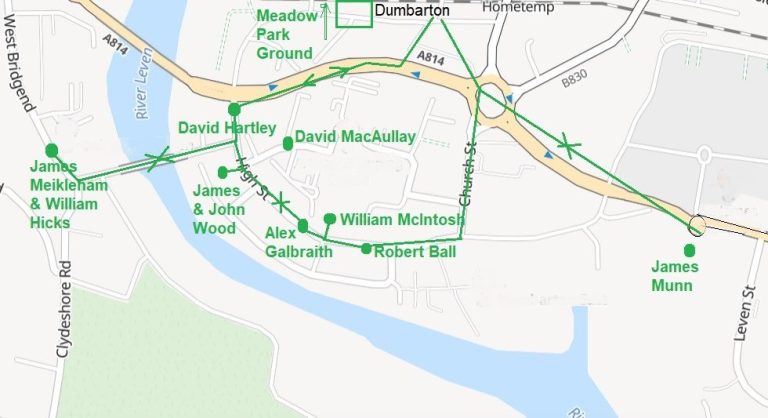
On the High St. itself from east to west there was Robert Ball at Nos 44/45. Alex Galbraith was at 107 and David David Hartley at 211. Still centrally Risk St. now mainly a massive car-park was the home of David McAulay with the brothers, John and James Wood on Brewery Lane and William McIntosh on College Park St.
Then crossing the River Leven to West Bridgend but still close to the town centre, there James Meikleham and William Hicks were to be found. In fact the only one was an outlyer was James Munn, who stayed on Clyde St. to the east in the direction of Dumbarton East railway station and now a retail park.
Strolls Two and Three
Strolls 1 and 2 are designed to be done either separately or together. They basically include the players that made the first team of note, 1, those who were local born and bred, 2, those from One who moved within the town or whose parents were drawn in by then booming industries.
Stroll Two
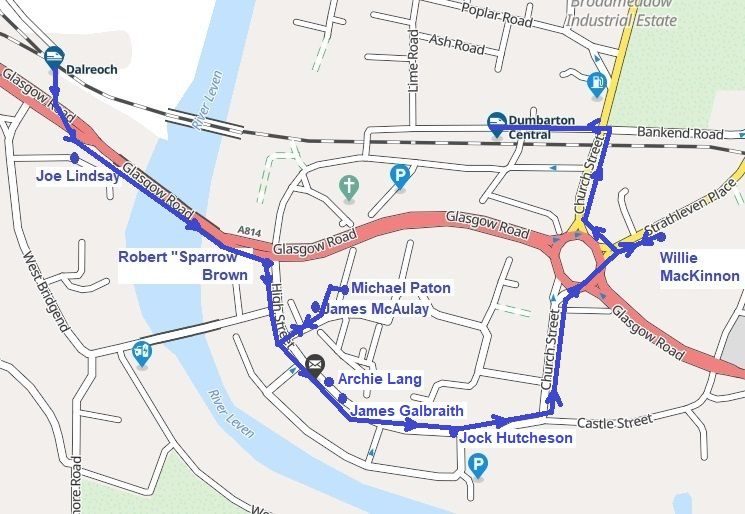
Stroll 2 is designed to start at Dalreoch, the next station beyond Dumbarton Central in the direction of Helensburgh. Exit it, cross the Glasgow Rd. and stop and lean on the metal railings. In front of you are the lawns and high-rises that have replaced the once-teeming William St.. It was the childhood home at No. 17 of Joe Lindsay, from 1877 to 1893 goalkeeper for his home-town team, for Renton and nine times for Scotland.
Continuing on, cross the River Leven by the Glasgow Road bridge to the lower end of the High St., on the corner of which was the home of Sparrow Brown, in 1884 the winner of two caps. He stayed in the tenements that once stood there, at No. 209. Then up the High St. after hundred yards you have on the left Risk St., where James McAulay, nine caps in five years, and Michael Paton, five caps in six years, both grew up.
Returning to the High St. turn left once more and, as the numbers descend, you will pass James Galbraith at No. 101, Archie Lang, with a single cap, at No. 97, later No. 199 and Jock Hutcheson at No. 46. Then at the top, turn left into Church St. taking it and crossing to Strathleven Place via the far-end roundabout. No. 16 was the home of Willie McKinnon with thirteen years service to his home-town club and four caps.
Stroll Three
From Strathleven it is a short walk to Dumbarton Central station and the journey home and it is also from Dumbarton Central that Stroll 3 starts and where it also finishes. It is a tour that can be done in either direction but here we will do it clockwise. So coming out onto Bankend Rd. turn left and left again through the tunnel under the tracks. You will find yourself at the head of College St. at the top end of which at now crumbling No. 93 lived perhaps the greatest of the Dumbarton players of the era, Leitch Keir. And by that time James McAulay had also move to College St. but No. 2 so at the other end, best accessed from where he had previously stayed on Risk St.
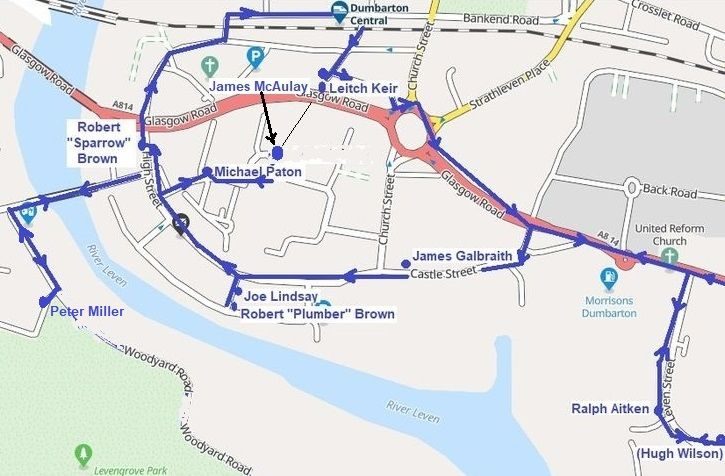
Then from College St. take the side road that now runs past the Dumbarton Municipal Building parallel with Glasgow Rd. eastbound to the roundabout beyond, crossing it onto Glasgow Road eastward. Admittedly Glasgow Rd. is not the most scenic of walks but have faith. Two hundred yards further on and there is smaller roundabout with a Morrisons on the right. Cross towards the supermarket but continue on the main road for a hundred yards more before turning right. By doing so you enter Leven St., or at least was is left of it. Ralph Aitken stayed at Nos. 17 and 41 before winning one cap, going South to Newcastle West End, one half of the future Newcastle Unuted, and returning to win a second international honour. And finally for this part of the tour there is Hugh Wilson, again a winner of a single cap. He would come to the town from Mauchline and live in the first turning left off Leven, at No. 10 Wallace St.. The house is no longer there but most of the street is, the first real example en-route of an old Dumbarton swept largely away by new-build.
Take the walk up Wallace St. and at the top turn again onto Glasgow Rd., retracing your steps, this time back past Morrisons until the wee cut-through, with site of the old Boghead ground to your left, by the Scottish Maritime Museum and Castle Terrace to where Castle St. itself is reached. Whichever way then take the latter all the way to the junction with Church St.. On the way pause at Nos. 25 and 27. They were again the homes of an older James Galbraith. Then carry on onto quiet, older, top end of the High St and, as the buildings turn to shops, second on the left, now a paved cut-through, is Quay St. It was where Joe Lindsay had moved from William St. and where, at Nos 1 and 6 respectively, he joined Plumber Brown, winner of a Scottish cap in 1885.
Now at this point you have a choice. First there is the length of the High St. past Risk St. and Sparrow Brown at 209 before a return to the station via the loop that is Station Rd.. The second is a pleasant excursion to what was the home of Peter Miller. He would from 1875 serve Dumbarton for twelve seasons, in two parts, nine and three with a season at Partick in between. He would in 1882-3 also make three international appearances, He might even have gone on to play at least semi-pro in England, in Hartlepool but he lived either at 17, Levenford Place, which became today's Levenford Court and 17, West Bridgend or at 17, Levenford Terrace. For the former Take Bridge St., the old bridge across the Leven, to where it turns right into West Bridgend and the location is in front of you or for the latter immediately turn left into Woodyard Rd. following it for a hundred yards. Levenford is third on the right overlooking Levengrove Park and the river.
Dumbarton Burials
Some twenty-five of the Dumbarton F.C. footballers from 1872/3 to the turn of the century. That compares with Vale of Leven with just two more, Warriston at Paisley with its also twenty-five players of real note and twenty at the recently-designated Cathcart Cemetery in the Southern Suburbs of Glasgow.
And it can easily be seen that those buried at the Dumbarton Old Cemetery were highly-concentrated around the High St., and old town with three exceptions Tom McMillan raised by Townend/ Meadowbank, the club's earliest grounds, Ralph Aitken and Hugh Wilson. The former stayed on Leven St and the latter a short distance away on Castlegreen St.. It points directly to just how "local" the town club was throughout its early history, something which would eventually lead to its decline.
Stroll Four
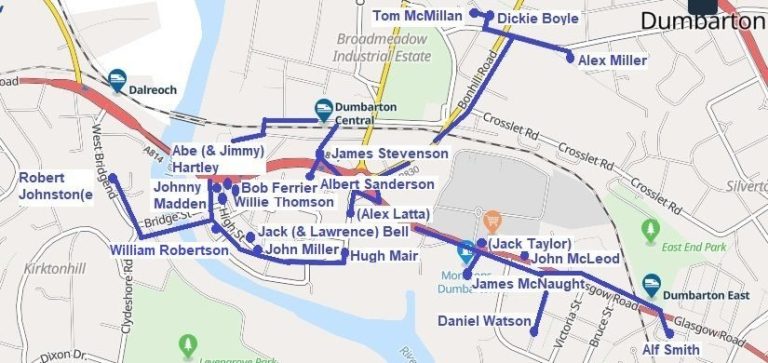
This fourth Stroll, by far and away the longest and perhaps worthy of a car or bike, is again one that can be taken in either direction and it can begin and end at Dumbarton Central or start at the former and end at Dumbarton East. This description takes the latter option and goes anti-clockwise. It is also the one that covers the second and greatest of the Dumbarton teams of the period, the lasting influence of which was ultimately felt not just in Scotland and England but as far as today's Czechia.
From Central turn left into Burnbank Rd. and follow it until the bottom of the High St. is reached at the Glasgow Rd. Between it and Bridge St. the tenements, the closes that had already been the source of Sparrow Brown now also produced the brothers, Abe and Jimmy Hartley, Bob Ferrier Snr, Willie Thomson and Johnny Madden. Thomson and Madden would win six caps between them but here was the difference. Brown had played only locally, whereas the new wave went South; the Hartleys to Everton and beyond and Lincoln and others respectively, Ferrier to Sheffield Wednesday, Willie Thomson, albeit briefly, to Newton Heath, Manchester United in embryo, and Madden to Celtic via Gainsborough and Grimsby. And, of course, Madden would be with Eaglesham's John Dick one half of the Scots duo that took the beautiful game to the Pragues, Slavia and Sparta.
Then comes a slight diversion, a there-and-back. Robert Johnston, or Johnstone as he became in England, lived half-way up West Bridgend at No. 58. After three seasons at his home-town club he would play for Renton, Sunderland, Third Lanark and Dunfermline. And West Bridgend can be found by turning left from High St. at Bridge St. and crossing the bridge itself. But back on High St. and moving further up you will find the childhood homes at Nos. 147 and 157 of Willie Robertson, the amateur exception that proved the rule, then more footballing brothers, the Bells, Jack and Lawrence, at No. 121 and that of John Miller at No. 101. Jack Bell would win ten Scottish caps, either side of Scottish professionalism, hinting that it might otherwise have been more. He would also play for Everton in two stints, Preston North End with Celtic in between. Lawrence Bell's thirteen year career would take in Third Lanark, Sheffield Wednesday, Everton, Bolton etc., and John Miller's Wednesday, between Liverpool and Derby County.
Now at the top of the High St. turn left into Church St.. This is where Hugh Mair lived at No. 7 and Alex Latta at No.45. Mair was a Dumbarton forward for a decade. Latta would win a single Scotland cap before, over six seasons, making one hundred and forty-eight appearances for Everton followed by a further year with Liverpool.
At the top of Church St. we are back at roundabout on the Glasgow Road. As before cross it into Strathleven Place and continue up and onto Bonhill Road and where Poindfauld Terrace joins from the left and Round Riding from the right. Left is where Tom McMillan and Dickie Boyle lived, both on first right Allan Place, the former at No. 7, the latter at No.1, having moved from 9, College St. so by Leitch Keir. McMillan would stay at home and win a single Scottish cap, Boyle would play alongside Latta at Goodison, making a total of two hundred and forty-one starts between 1892 and 1901. Right are the various childhood homes, all around Boghead, of Alex Miller, Boghead Park being the Dumbarton ground at the time. He would also stay local but in his case for a full decade.
Retracing your steps back to the Glasgow Rd. roundabout now turn left eastbound and to Morrisons once more. It stands now on what was once Clyde St. James McNaught lived on it at No. 44 and Jack Taylor at No. 19 before moving to nearby Jamesfield. Indeed Dickie Boyle spent his early years at No.1. McNaught would go South to Newton Heath once more and Spurs, Taylor to St. Mirren, four hundred games for, like several full or near contemporaries, Everton and four Scotland caps. And beyond Jamesfield still on the Glasgow Rd. lived goalkeeper, John McLeod. A Dumbarton man through-and-through apart for five games for Rangers at the very end of his career he was born on the High St., brought up at Greenfield, then a market garden now houses backing onto the St James Retail Park and then lived at No. 73 and would also have five Scottish appearances to his name.
So now there remain just four more players in a stroll that has taken in sixteen already. Two are in the sides streets close to Dumbarton East station. They are Daniel Watson and Alf Smith. Both played out their careers in Scotland, the former solely at Dumbarton, the latter splitting his time at his town-club and Third Lanark. Neither was capped. Watson stayed on Wallace St. by Hugh Wilson and then Plumber Brown. Smith was at 5, Burnside Terrace, just to the east of the railway. The two others are on the return to Dumbarton Central. The first is James Stevenson, who grew up first on Church St. with Latta and Mair and then finally on College St. at No. 75 again by Leitch Keir. And Stevenson, whilst he would never be capped as his neighbour had been, would start and finish at Dumbarton with an eight year down South between, mainly at Preston and West Bromwich. The second is Albert Sa(u)nderson, a duck through the underpass to where No. 45 once stood and is now the Risk St. car-park. He would spend five seasons solely at The Sons before moving to Newcastle, an economic rather than football migrant.
Stroll Five
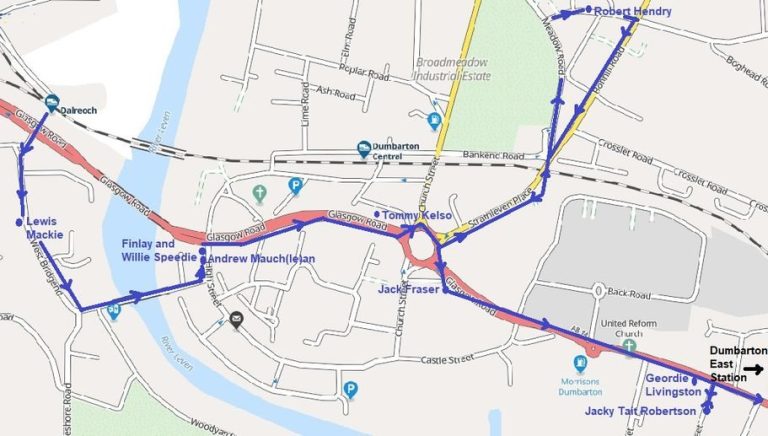
And so to the fifth and last of the Dumbarton Strolls to be taken individually or, at a push, together. It takes in the last flourish of a Dumbarton team that in March 1897 reached the Scottish Cup Final in 1897 before, just five season after being League champions, dropping out, albeit temporarily, of the Scottish League system altogether. It is also a stroll that is long in distance, few in player number and can either begin and end at Dumbarton Central, start at Dalreoch and finish at Dumbarton East or even at any combination of the above. However, for the sake of this itinerary we will describe the first of the options.
So exit Dalreoch Station and cross the Glasgow Rd. into West Bridgend. Lewis Mackie, a member, seemingly aged just seventeen, of the 1897 Cup-losing eleven, lived at No. 105. Then at the end of road turn left into Bridge St., cross the river and on High St. left once more, where the tenements that had already given Dumbarton F.C. and the wider footballing World Sparrow Brown, the Hartleys, Willie Thomson, Bob Ferrier and Johnny Madden now produces Andrew Mauchlen or Mauchan and Finlay Speedie and bother, Willie. In fact the Speedies seem to have lived at the same addresses, No. 209 and No. 210 respectively, as both Brown and Madden, although ten years apart in each case. And those addresses was from where Finlay would go on to Rangers for six seasons, two more at Newcastle and win three caps before a return home, Willie and Mauchan also be part of the Cup eleven, with Mauchan staying at home and Willie moving on to Third Lanark.
Then it is along Glasgow Road eastwards to what was College Park St.. Now cleared and the site of the Dumbarton Municipal Building Tommy Kelso stayed at No. 7. Renton-born and the nephew of the former Renton player and Scotland international, Bob Kelso, he would be awarded one cap but only after beginning at Third Lanark, a long stay South with Manchester City and a return to Dundee. Then it was Rangers and home-town once more.
Now continuing on, at the roundabout that the Municipal Building overlooks turn left into Strathleven Place, over the railway and left again into Meadow Rd., following the park to Poindfauld Terrace, the teenage home of Robert Hendry, another of the Cup team. That is before a return via a right into Bonhill Rd. and Strathleven once more to the Glasgow Rd., where it is left once more and across. There Jack Fraser lived at 1, MacLean Place, no longer there but then by the prison and now by the Sherriff Court. He would win a single cap, play at Notts County, Newcastle and Southampton but also for Motherwell and St. Mirren, ending with one hundred and eighty-eights starts also for Dundee.
And finally, continuing along Glasgow Road to East station, beyond Morrisons once more, we pass an earlier home of Tommy Kelso at No. 8, Glasgow Rd. and at No. 64 that of Geordie Livingston. He would win two caps during a fifteen year career that would include times at Hearts, Sunderland, Celtic, the Manchesters, City and United, and Rangers, and even a year managing Dumbarton itself. And last but not least there would be Jacky Tait Robertson. He would be just round the corner, a third to stay on Wallace St., this time at No. II, from where over seven seasons he would make sixteen international appearances, whilst turning out for Morton, Everton, Southampton, Rangers and Glossop with in-between a year at Chelsea, where he was its first League captain.