Alexandria,
Bonhill and Jamestown
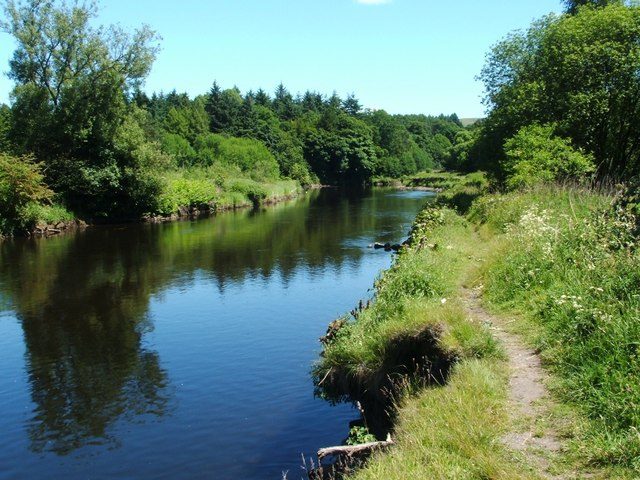
The River Leven flows south from Loch Lomond at Balloch and along its upper reaches a number of early-industrial towns and villages took shape. All lay in the ancient parish of Bonhill. First on the left bank was Jamestown, then the old village of Bonhill itself, connected from 1836 by bridge to the much newer but already, from a hamlet and shop in the previous century, the town of Alexandria on the left bank. It had been established by the Smollett family with the fountain named for it today at the junction of Main and Bank Streets.
Alexandria's prosperity would be built on Turkey-Red dyeing of cloth and the Orr Ewings. John would own the Croftengea and Levenfield works on the west bank of the river, his younger brother, Archibald, the Levenbank-, opposite Croftengea, and the Milton-works in Jamestown on the other bank and finally south of Bonhill the Dillichip-Works.
And businesses boomed. Archibald alone is said to have up to 2,000 employees, built good-quality housing for them and, unlike, John, albeit that his works lay on across the river, is said to have been interested in sport and in Alexandria to have been able somehow to "secure access to a local field before opening a ground at North St. Park". That first ground was Cameron Field, land owned by the local dairy-man and apparently near the present-day cemetery. North St. would lie adjacent to the town's gas-works.
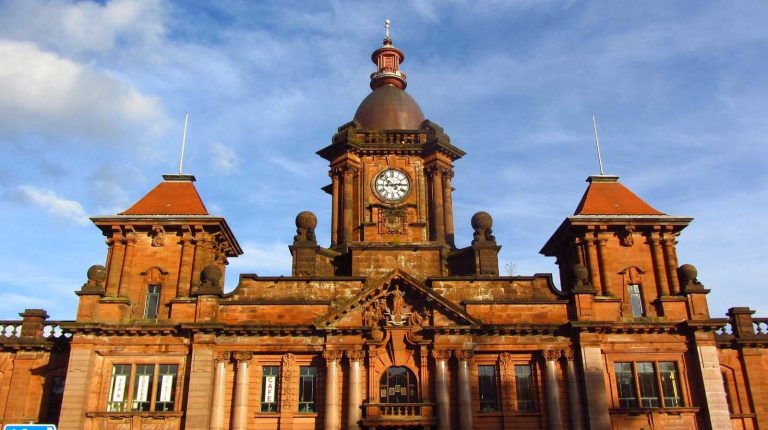
The result of the dyeing boom would be a number of fine buildings in the river-side towns, some left standing despite generally unsympathetic clearing. But some remain with perhaps the most interesting from a slightly later era. In 1906 the Argyll Motor works, then the largest outwith the USA, was opened to the north of Alexandria itself. Its stunning facade and main building remain, the latter in part a shopping but frankly a potentially ideal site for a museum of the full Scottish game.
For a more detailed history of Alexandria click on the five links below:
Alexandria Page 1 Alexandria Page 2 Alexandria Page 3 Alexandria Page 4 Alexandria Page 5
For a more detailed history of Bonhill click on the five links below:
Bonhill Page 1 Bonhill Page 2 Bonhill Page 3 Bonhill Page 4 Bonhill Page 5
For a more detailed history of Jamestown click on the link below:
_______________________________________________________________________________________________________
Renton
and Millburn
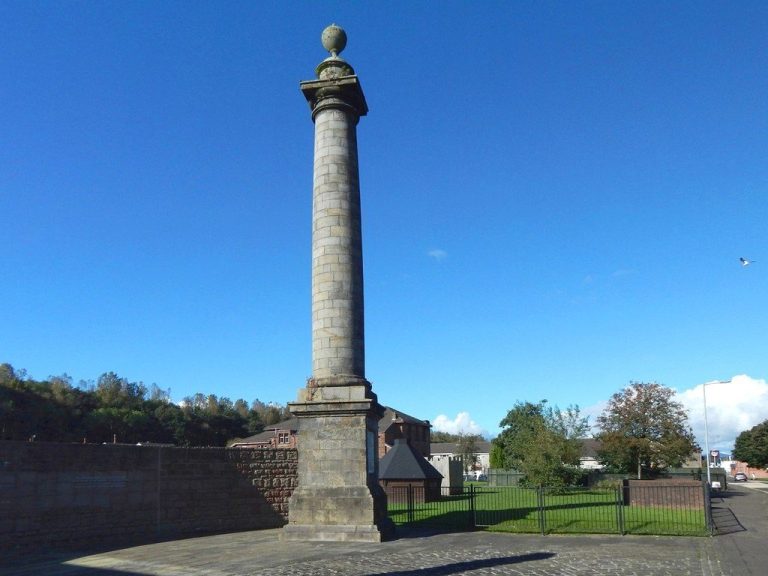
Past Alexandria and still on the Leven's left bank is Millburn and beyond that in Cardross, the neighbouring parish to Bonhill, Cardross the once model village of Renton. Begun in 1782 it was built once more by the Smolletts of Bonhill, with a monument on Main St. to locally-born writer, Tobias Smollett. And it was designed to house the growing numbers, increasingly drawn from at first the Highlands (a Free Gaelic Church was opened in 1856, shinty was played widely) and then during the Famine from Ireland, who would work in the cloth-bleaching and -dyeing works that had from 1715 grown up along that stretch of the river.
The works, Dalquhurn for bleaching from 1715 and from the 1770s Cordale for printing, by 1791 traded as William Stirling & Co., that is until first being bought out in 1878 by a consortium including Alexander Wylie and would in 1897 be with the Orr Ewing operations in Alexandria a part of UTR, United Turkey Red.
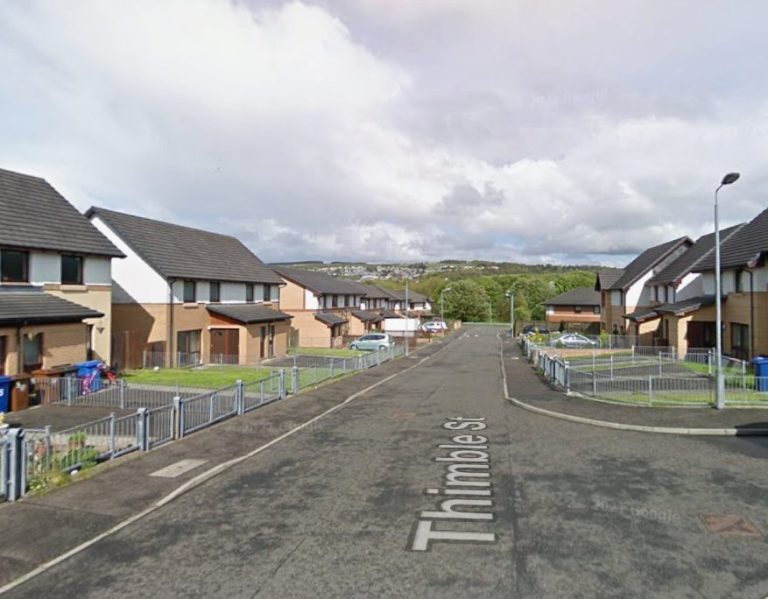
And it would be Wylie, who would be through financial support a driving force probably in the initial Renton F.C. and its successful re-emergence from 1883.. The first Renton F.C., founded in 1872, had been instrumental in the initial development of the distinctively Scottish-Game. The second Renton, from 1883 and notably in 1888, when it would sweep all before it, would be the source of the reformulation that would develop to become our modern game. And it do it from a three-fold cradle, its Main St., back St. and the then tenements of short but remarkable Thimble St., the most pivotal hundred or so yards in the history of the World's game.
For a more detailed history of Renton click on the five links below:
Renton Page 1 Renton Page 2 Renton Page 3 Renton Page 4 Renton Page 5
_______________________________________________________________________________________________________
Dumbarton
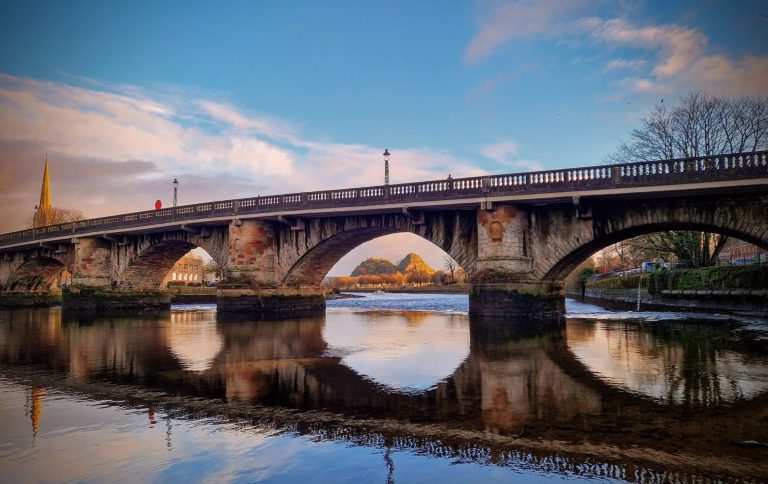
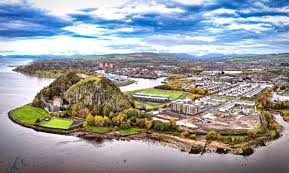
Once the capital of Brythonic South-west Scotland and North-west England and with its fortress rock, Dumbarton, Bridgeton on the west bank of the river and the neighbouring village of Cardross had grown from the port at the mouth of the Clyde to a major centre, particularly of ship-building, drawing in workers, skilled and labouring from all directions. By 1870 the Vale of Leven itself had a population of between 9,000 and 12,000, with Dumbarton about the same in addition, so perhaps a total of just 24,000. Not much by modern measures but more than enough, it seems, for what in terms of football was about to take place.
The town has in Dumbarton F.C. Scotland's third oldest, continuously surviving Association football club, deferring only to Queen's Park and Kilmarnock. But on-field it was something of a slow starter, despite participation, alone from the immediate area, in the first ever Scottish Cup, its major involvement initially being the game's first off-field stoochie; the attempt to ban Vale of Leven's John Ferguson as a "professional". But that was before rival town clubs, Alcutha and Lennox, would feature from the Cup's third playing and into the 1880s Dumbarton F.C., even as yet more teams formed about it, with a series of settled and very much locally-drawn teams, emerged as real competition to Queen's Park and The Vale. And, again with the addition still of other new clubs, into the 1890s it would forever be the winner of both the first two playings of the Scottish League before official professionalisation and assembled teams swept locality aside.